

Emily Carter, Beauty Editor.
You are standing at the mirror with the wand halfway to your lashes, wondering why the mascara that looked so promising in the Boots aisle has gone patchy by lunchtime. Somewhere in the bathroom cabinet there are three half-used tubes of ‘volumising’ formula, all abandoned for the same reasons: clumps, smudging under the eye, or lashes that look exactly as they did before you started. None of this is really about the mascara. It is almost always about the handful of habits that come with applying it. One useful fact before anything else: every time you pump the wand in and out of the tube to ‘load’ it, you push air inside, and that air dries the formula out far faster than daily use alone ever would. Fix that single habit and most tubes last noticeably longer. This guide walks through the mistakes that quietly ruin volumising mascara, the mechanics behind why they happen, and simple ways to judge whether a formula and a technique are actually working for your lashes.
- The wand is the usual culprit – pumping it in and out of the tube introduces air and dries the formula days or weeks before its time.
- Thin coats outperform thick ones – two light layers, each allowed to set, build more visible volume than one heavy pass and avoid the clumping that heavy formulas invite.
- Three months is the real shelf life – once a water-based mascara passes that point, bacterial load and texture change regardless of how much product remains in the tube.
Why Volumising Formulas Behave Differently On The Brush
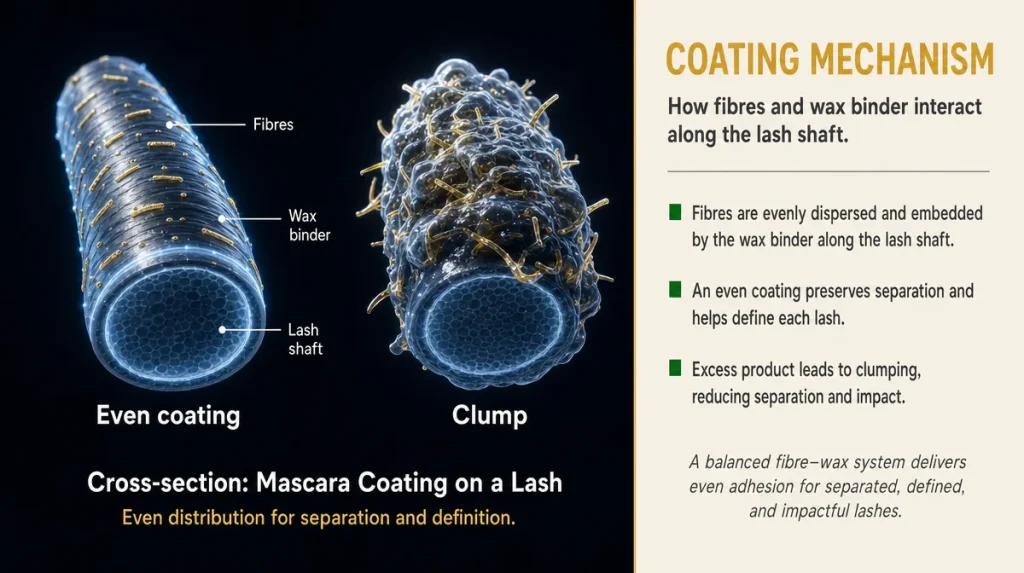
Volumising mascaras carry more wax, polymer or fibre than everyday formulas, which is precisely what gives lashes that thicker, fuller look. The trade-off is that a heavier formula is less forgiving of technique. Think of it like plastering a wall: a thin, even layer sets smoothly, while a thick one, slapped on unevenly, cracks and clumps as it dries.
A 2022 study in the International Journal of Cosmetic Science looked at mascara film formation and found that formulas with higher wax content were more prone to visible clumping when applied in a single heavy stroke, compared with the same product built up in two thinner passes. The chemistry does not change depending on brand; the behaviour under the brush does.
This is also why a formula that performed beautifully on a friend’s lashes can disappoint on yours. Lash density and curl type both affect how a thick formula distributes, which is one reason beauty editors at British Vogue and elsewhere routinely caveat ‘volumising’ claims with the detail that results depend heavily on natural lash type, not just the tube.
The Wand Habit That Dries Out Every Tube Early
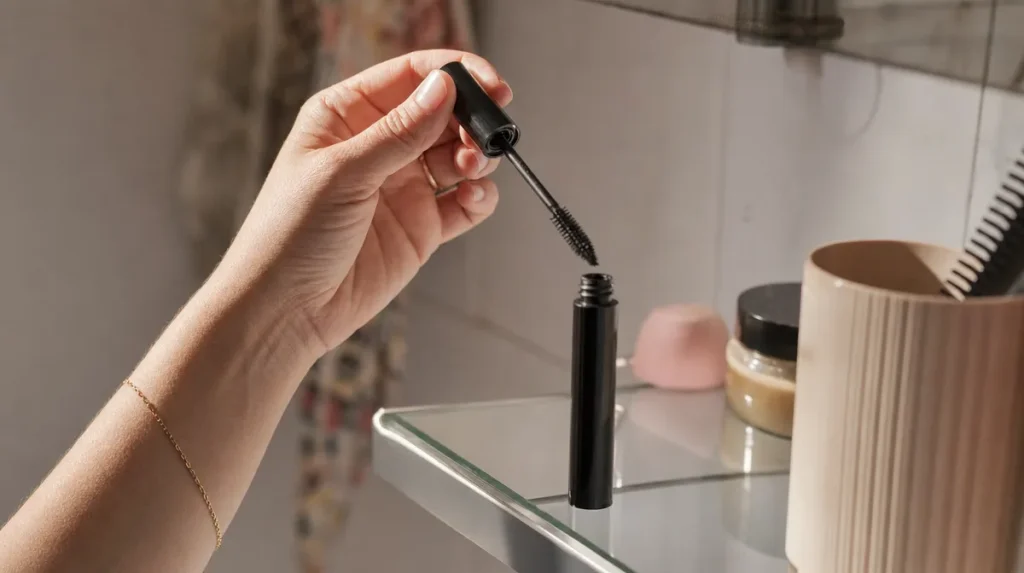
Almost everyone pumps the wand a few times before the first stroke, on the assumption that it loads more product. In practice it does the opposite. Each pump pushes a small volume of air down into the tube, and that air accelerates evaporation of the solvents that keep the formula workable.
The better habit is to twist the wand gently as you withdraw it, letting the tube’s own seal scrape off excess product, rather than plunging it repeatedly. This single change can add real weeks to a mascara’s working life, which matters more than it sounds, since a dried-out formula does not just apply unevenly, it drags at the lash line and can shed into the eye.
If a tube already feels tacky or stringy, resist the urge to add a few drops of water or saline to loosen it. That dilutes the preservative system and, per general guidance from pharmacy bodies on eye cosmetics hygiene, raises the risk of bacterial contamination rather than restoring the formula.
Curling Before You Coat, Not After
Order of operations matters more than most people realise. Curling lashes after mascara has set can snap the coating, leaving flecks on the curler and visible breaks along the lash. Curl first, while lashes are still bare and pliable, then apply the mascara once the curl has held for a few seconds.
A heated curler, used briefly and on a low setting, holds a curl longer on fine, straight lashes, which is often the texture that resists volumising formulas most. The mechanism here is simple: heat softens the keratin structure of the hair temporarily, allowing it to bend and set in a new shape, the same basic principle behind a heated hair styler.
One mistake worth flagging: curling repeatedly through the day to ‘refresh’ a fading curl, mascara and all, is the single most common cause of lashes bending unevenly or snapping at the root. If the curl has dropped by mid-afternoon, a light reapplication of mascara on the tips does more good than another pass of the curler.
Building Volume Without Clumping: The Two-coat Rule
The instinct with a volumising formula is to keep going until the lashes look as full as possible, often in one continuous session. That is usually where clumping starts. A wet second coat applied directly over a wet first coat does not add volume evenly, it pools at points along the lash and dries as small hard beads.
The more reliable method is two light coats with roughly thirty seconds between them, long enough for the first layer to set tacky rather than wet. Apply the second coat from the base of the lashes outward in a light zigzag, which distributes product between individual lashes rather than gluing several together.
A third coat rarely adds meaningful volume and more often adds weight, which is why lashes can look fuller in the mirror immediately after application and then droop within the hour. If more definition is wanted on the outer corners only, a thin coat there, rather than another full sweep, keeps the rest of the lash line from becoming overloaded.
Taking It Off Without Losing Lashes
Volumising formulas, because they contain more wax and film-formers, are also harder to remove, and that is where a lot of lash damage actually happens, not during application. Rubbing or tugging at a stubborn mascara pulls on lashes still anchored in the follicle, and repeated tugging over months visibly thins the lash line.
The gentler method: hold a cotton pad soaked in a proper eye make-up remover against closed lashes for ten to fifteen seconds before wiping, rather than scrubbing immediately. This allows the oils or micellar solution to break down the wax first. Sweep downward, in the direction lashes naturally grow, not side to side.
Good Housekeeping’s long-running testing pages on eye make-up removers have noted that oil-based formulas tend to break down wax-heavy, volumising mascaras more completely than micellar water alone, which is a useful distinction if a ‘waterproof’ or heavy-wax formula is proving difficult to shift at night. Leaving mascara on overnight, incidentally, is the other reliable way to end up with brittle, flaking lashes by morning.
Reading The Label: What ‘Volumising’ Actually Promises
The word ‘volumising’ is not a regulated claim, which means it can describe anything from a genuinely fibre-loaded formula to a standard mascara with a wider wand and bold packaging. Brushes with more bristles and a slight curve tend to deposit more product per stroke, which is one honest way manufacturers achieve the look without changing the formula much at all.
Ingredient lists are more revealing than the front-of-pack claim. Formulas listing waxes such as carnauba or beeswax near the top, alongside film-formers, are more likely to build real thickness than ones where water and simple polymers dominate. This is the kind of distinction the British Beauty Council has pointed to in its consumer guidance on reading cosmetic ingredient panels.
It is also worth remembering that a mascara cannot add lashes, only coat the ones already there. Claims implying permanent thickening or lash growth sit outside what a coating product can do, and the Advertising Standards Authority has previously required such claims to be qualified or removed when challenged.
Storing It So It Still Performs At Month Two
Mascara has one of the shortest safe shelf lives of any beauty product, generally around three months once opened, regardless of how full the tube still looks. The tube is opened and closed daily, each time introducing a little more air and a little more bacteria from the lash line itself.
Damp winters make this worse. Central heating and condensation in a steamy bathroom both encourage the formula to dry unevenly inside the tube, which is one reason a mascara that performed well in October can feel stringy by January. Storing it somewhere cooler and drier, away from a radiator or a steamed-up mirror, keeps the texture more consistent for longer.
Writing the opening date on the tube with a fine marker, a habit the Good Housekeeping Institute has recommended for mascara specifically, removes the guesswork. If a formula starts to smell different, separates, or the wand drags rather than glides, it has reached the end of its useful life even if the three-month mark has not technically passed.
A Thirty-second Mirror Check
Before buying another tube, it helps to work out whether the last one actually failed, or whether the technique did. Try this the next time you apply mascara: coat one eye using your usual method, then coat the other eye using a single thin layer, applied from base to tip in one slow stroke, with no pumping of the wand beforehand.
Look at both in daylight, not bathroom light, after a few minutes. If the thin-coat eye looks nearly as full and noticeably less clumped, the issue was the application, not the formula. If both eyes look thin regardless of technique, the mascara itself may simply lack enough wax or fibre to do what the label promises.
This small test, run over a few mornings rather than once, tells you more about where your money and effort should go than any amount of reading ingredient lists. It is the same logic Which? applies in its own comparative mascara testing: control the variables, then judge the result.
Key Takeaways
Most volumising mascara disappointments trace back to habit rather than formula. The wand, the drying time between coats, and the way the product is removed each have more influence on the final look than the marketing on the box. A formula with genuinely more wax or fibre will still need patience and a light hand to look its best, and even the richest formula cannot outlast three months of daily opening and closing once it has been exposed to air.
A Quick Checklist For Next Time
- Twist the wand out gently; do not pump it in and out of the tube.
- Curl lashes before applying mascara, never after.
- Apply two thin coats with a short pause between them, rather than one heavy pass.
- Remove with a soak-and-wipe method, sweeping downward, not side to side.
- Write the opening date on the tube and replace it at three months.
- Store away from radiators and steamy mirrors in winter.
- Judge a formula with a side-by-side thin-coat test before blaming the product.
This article is for general information and does not replace a one-to-one consultation with a dermatologist, optician or qualified beauty professional.
Individual results vary; lash length, density and curl type differ from person to person.